Showing posts with label Review. Show all posts

Wednesday, 23 November 2011

U2 Achtung Baby [Super Deluxe Edition]


FIND IT AT :
"If you give a pop star a shit pile of dough and he refuses to self-destruct, I think it is a bit wet," said a smoking, slicked-back, black-sunglasses-clad Bono in a 1993 interview on the UK music show "Naked City". "I think it's part of the deal. If they don't die on a cross by 33, I'd ask for your money back." Like many of the knowingly audacious quotes from the singer and his U2 mates during this period, it's a little tough to deduce the exact level of sincerity involved. And that was the whole idea. In the early 1990s, U2 were sending up the idea of a "rock'n'roll star." They were offering themselves as an ironic, postmodern band for similarly confused times. They were making fun of themselves and their own humorless, slate-faced 80s reputation. A year after Bono's casual quip about pop stars dying on a cross, Kurt Cobain killed himself. And in Nirvana's final video, for "Heart-Shaped Box", Cobain could be seen making wild eyes in front of one.
Achtung Baby and its accompanying Zoo TV tour lived within the slippage between perception and reality. "Sometimes you can get far closer to the truth of what you're trying to say by highlighting what it isn't as if it were true," said the Edge on "Naked City". "That's assuming we know the truth-- 'truth' is one of those words that's lost its meaning." In the 80s, U2 seemed endlessly in search of a definite truth, whether in peace or god or love or some ambiguous combination of the three. Famously, they didn't find it.
But the quest was thrilling-- at least until 1988's album and film Rattle and Hum, which found the group looking and sounding spectacularly self-serious while gawkily paying tribute to some of their American heroes like Elvis Presley and B.B. King. The resulting critical backlash caused these open-hearted Irishmen to reflect, and they weren't crazy about what they saw in the mirror. "We looked like a big, overblown rock band running amok," says Bono in an excellent new documentary called From the Sky Down that chronicles the band's pivotal turn-of-the-decade moment. And while that might seem like an aptly derisive opinion of today's incarnation of U2, it's important to remember that these guys originally came out of the cacophony of rule-breaking post-punk, a realm where bloated arena rock was the enemy. So they went away and tried to come up with a new way to seek some truth.
Achtung Baby is rightly known as one of rock's greatest reinventions because it was so complete. Sure, U2 changed their sound from chiming melodics to lurching, distorted rhythm. But they also changed their attitude, their demeanor, their look, their ideas on how to deal with celebrity. All of a sudden, they were funny, sexy, a bit dangerous-- three things few would've associated with U2 in the 80s. And yet, at their core, the band's values remained constant. They were still ethically minded and interested in the real-life connection between living beings. But the way they went about projecting those core tenets flipped. In TV-news parlance, their attitude switched from "60 Minutes" to "The Colbert Report".
This new era was conveniently spelled-out on Achtung's first single "The Fly" with the Edge's metallic skronk and Bono's conspiratorial, effected whisper of lines like, "It's no secret that a conscience can sometimes be a pest/ It's no secret that ambition bites the nails of success." And just as the album goes lengths to both fulfill and upend rock'n'roll myths with thorny tales of deep betrayal, questioned fidelity, and ambiguous artifice, this coffee-table-book sized, 6xCD, 4xDVD set both props up Achtung and pokes a few holes in it, too.
Take the album's much-ballyhooed place of origin, Berlin's Hansa Studios. This was the location that played host to David Bowie and Iggy Pop's electronic-inspired masterworks Low and The Idiot. And Hansa is located near the Berlin Wall, which had only recently been breached when U2 set up there in the fall of 1990. Perched literally in the middle of historic liberation, U2 were meant to find inspiration in the world events around them and turn that spark into a new version of the band for a new decade. It's a great backdrop for a great story. But it didn't really go down that way. "We're there, and greatness has left the building," Bono recalls in From the Sky Down, which features the band returning to Hansa earlier this year in preparation for their headlining set at Glastonbury.
While Berlin did inspire bits of the record-- "Zoo Station" was named after one of its prominent train terminals-- it hardly lived up to its lofty reputation. This serves as a lesson for U2, a band that shamelessly worships past rock heroes, to move past such naïve mythologizing. "Berlin was a baptism of fire," says bassist Adam Clayton in the documentary. "It was something we had to go through to realize what we were trying to get to was not something you could find physically, outside of ourselves, in some other city-- that there was not magic to it and that we actually had to put the work in and figure out the ideas and hone those ideas down." This newfound pragmatism would help them to move past their fantasies about the sanctity of rock. So while Berlin played a part on Achtung Baby, it did so in surprising ways; though "One" was mostly written in a burst of inspiration in Hansa, most of the album truly came together once the group went back home to Dublin.
Most of the audio bonuses in this set are unfortunately superfluous, and don't offer much in terms of insight. There are two CDs filled with dance remixes, and while U2 were at the vanguard of big time rock bands embracing the notion of the remix, even the most devout rave nostalgist would have little use for six remakes of "Mysterious Ways". The disc of bonus material and B-sides is disappointingly slight, and another filled with early versions of every song on Achtung offers a few revelations-- an Irish gig-style version of "Tryin' to Throw Your Arms Around the World" has an easy charm, but generally, it's easy to see why these attempts were improved upon later. Achtung's even more electronic and weirder follow-up, 1993's Zooropa-- which was recorded in a creative frenzy during a break in the Zoo TV tour-- is also included, though it's generally (and somewhat unfairly) glossed over in all the accompanying materials.
The worthy additions in this "super deluxe edition" are nearly all visual. There's Anton Corbijn's gorgeous and colorful photography that covers its case, as well as a big, sturdy 84-page book. And then the four discs of video: It Might Get Loud director Davis Guggenheim's new 90-minute doc From the Sky Down, every video from the era, a full live gig taped in Australia in 1993, interview shows (like "Naked City"), and, best of all, a playfully subversive TV special from 1992 that includes live footage from the Zoo TV tour as well as goofy interludes that play up the surrealism and insanity of the whole project. Moments like the "Even Better Than the Real Thing" video, with the band playing in a glass case while fans look on outside, successfully tie in all the pomo flourishes U2 were chasing. The group was at the forefront of bringing huge video screens into the live arena, and some of the tricks they pull off-- Bono "dueting" with a static-y Lou Reed or flipping channels to live local stations-- still look impressive. And for all the technical wizardry of the stage setup, the band still uses it to complement the music rather than overshadow it. Even 20 years on, the tour looks like something to behold, a singularly inventive experience that no band-- including U2 itself-- has been able to really expound upon in a meaningful way.
In the Zoo TV special, which originally aired during Thanksgiving weekend in 1992, a "news commentator" covering the show dubs it "the most significant and exciting TV event since the Gulf War." Some of the ideas behind Zoo TV and Achtung Baby were inspired by the television coverage of that initial Gulf War in 1991, and the bizarre reality of being able to switch channels from home shopping to MTV to the bombing of Baghdad. U2 recognized the dangers of this idea, when war turned into just more filler for the burgeoning 24-hour TV-news cycle. And instead of preaching against it in a high and mighty fashion, they embraced that chaos in an effort to expose it. Of course, our collective information overload has been upped exponentially since thanks to the internet, making the flashes of words and slogans that backed U2 during their live campaign seem eerily prophetic. Talking about the Zoo TV audience in the "Naked City" interview, drummer Larry Mullen, Jr. says, "They're coming to a rock'n'roll show and watching television, what more can you ask for?" He's joking, but as we go to arenas and see singers on big screens through our cellphone cameras, the question begins to answer itself.

Grown Below - The Long Now review


01. Trojan Horses
02. Devoid of Age
03. The Abyss
04. Minaco II - Nebula
05. End of All Time
06. The Long Now
07. Malklara


A couple minutes in to The Long Now, I was bracing for a long hour. It started off as yet another of what I just referred to as an "SSDD: Same Shit, Different Dudes" release. Post-Rock/Metal medium paced riffing, growled vocals.

Then the Belgian band shifted gears into the obligatory Mellow Moments phase that seemingly all these post-y acts do... and, to an extent, won me over.

Bass took primary focus while the guitars shifted to a light, floating ethereal quality. These parts were not just short little divergences from familiar mid-paced riffing, but went on for extended periods of time. Enough to ease you in and lull you to a semi-conscious blissful daze.

The vocalist shifted gear as well, to a clean sung voice... He won't be topping any best front man polls 'round these parts, but his voice was flawed and conveyed some form of sorrow that really enhanced the already particularly well done quieter voyages.

Grown Below toss in other elements, such as synthed string accompaniment, as well as some female vocals which harmonize both with the clean and growled male parts.

And perhaps another effect of these extended vacations from the distortion pedal is that when they return to (post-)"rock!" mode it makes those riffs more enjoyable as well.

The whole album seems a bit better put together and executed than a lot of the others I've reviewed this year. While it might be odd that I extol the non-\m/ sections on a review for a metal site, those sections are what will convince me to revisit the album and listen to it after the review is up...


Website: http://grownbelow.bandcamp.com/album/the-long-now


Performance: 8
Songwriting: 7
Originality: 7
Production: 8

Ty Segall Singles 2007-2010


Find It At :
"When you play music and you're a person on a stage, sometimes people can put you on a pedestal, and that can do a lot of things to your head. And... what if it actually exploded all over the walls during a show?" That's Ty Segall speaking to SF Weekly earlier this year about his 2011 song, "My Head Explodes". It's a fairly straightforward description of a song that isn't terribly complicated. Guy sings. People watch. Guy's head explodes. It's not hard to picture Segall's head exploding. He sings hard and loud and with the shrill fury of a castrated animal. And he does this a lot. Since quitting his band, Epsilons, less than four years ago, Segall has become arguably the most exciting and probably the most prolific member of San Francisco's evolving garage rock scene, which also includes Thee Oh Sees, the Fresh & Onlys, and Sic Alps (with whom Segall formerly played). Since going solo, he's released five albums of original material; two split LPs; a live album; a cassette-only compilation; eight 7"s; four split EPs; a collaborative album with Mikal Cronin; and appeared on four compilation albums. The man is prolific. Trying to keep up will, if not enough make your head explode, at least incite heavy migraines.
This year's Goodbye Bread, his first release for Drag City, is easily his best, the accumulation of learned songwriting tricks and a developing melodic sense, with an emphasis on sonic clarity and the influence of some august icons, notably John Lennon and Marc Bolan. (Oh yeah, Segall recorded a tribute EP to Bolan's T. Rex this year, too.) In the afterglow of Goodbye's success, Memphis label Goner Records, Segall's former home, has compiled Singles 2007-2010, a sort of refresher course and unheard odds-and-ends set that serves as a tenacious, temporary portrait of Segall. There are hints everywhere at the songwriter Segall would become, but Singles is much more about the flail of youth than honoring tradition. In a few years, he's garnered comparisons to a wide swath of artists, from Nuggets-friendly English bands like the Troggs and the Pretty Things, to working-class American menace-peddlers like the Stooges and Ramones, to early recordings by the White Stripes (especially prevalent on this comp), down to the late Jay Reatard, a significant guidepost for Segall.
Singles is a stew mixing all of those ingredients and more. There are hints of Devo in the mechanized synth and drum tracks on early versions of "So Alone" and "The Drag". (Before forming his band, Segall often played all the instruments on his records, including drum machine.) Listen for ? and the Mysterians-like organ at the outset of "Skin", maybe the best song here. And in that voice, which vacillates from desperate howl to wallowing drone, a little Kurt Cobain, too. It's hard to know what's a relic and what's an advance here. Segall appears in love with surface imitation at times, while peeling the skin back at others. On the faux-British B-side "Fuzzy Cat", you can hear John Entwistle of the Who's gothic goof-off "Boris the Spider". The appearance of a cover of Chain Gang's coiled, minor punk masterpiece, "Son of Sam", feels like a cred grab, but an accomplished one. On "Caesar", which would later appear on 2010's Melted in more polished form, there's a little of the stomping acoustic rock that would become the underbelly of Goodbye Bread. Segall, like so many developing artists, seemed to be constantly toggling between ideas of himself.
Singles, while comprising 25 songs, is still less than one hour's worth of music-- this iteration of Segall was economical. Only now, as his ambition grows, so do the lengths of his songs. Just one here exceeds three minutes-- it's the demo version of "So Alone", which was eventually whittled down to less than two and a half minutes for Horn the Unicorn. After acclaim for the elliptical and sometimes very pretty Goodbye Bread, one might assume Segall's left the crash-and-bash of Singles 2007-2010 behind. But then, his new single, "Spiders", is all doom and drone-- a violent, glorious devolution-- clocking in just under three minutes. So much for obvious trajectories.

Monday, 21 November 2011

Pure Reason Revolution - The Dark Third review


Disc I
01. Aeropause
02. Goshen Remains
03. Apprentice Of The Universe
04. The Bright Ambassadors Of The Morning
05. The Exact Colour
06. Voices In The Winter / In The Realms Of The Devine
07. Bullits Dominae
08. The Twyncyn / Trembling Willows
09. He Tried To Show Them Magic / Ambassadors Return

Disc II [Inside Out release]
01. In Aurelia
02. Borgens Vor
03. The Exact Colour
04. The Twyncyn/Trembling Willows
05. Golden Clothes


Progressive Pop/Rock/Metal
Label: Inside Out [Distribution in France: Replica Records]
England: 2007
Length: 64:46

Line-Up on the CD:
Vocals, bass: Chloe Alper
Vocals, guitars, programming, keyboards, bass: Jon Courtney
Guitars, vocals: Jamie Willcox
Drums: Andrew Courtney

Originally released 10th April 2006; the InsideOut edition has a second CD and was released the 16th Fefruary 2007.


It's not so usual to have good surprises nowadays, but with a bit of luck sometime you can receive some good new albums. "The Dark Third" the first album of the British of Pure Reason Revolution is one of these good surprises. With a lovely mix of Metal, Pop and Progressive Rock a la Pink Floyd, PRR is for me one of the first great surprises of the year 2007. If you like cool Prog and nice female vocalist I simply recommend you to check this release.

If you want to understand how the music of PRR sounds, you'll have to imagine a mix of Pink Floyd (I'm talking of the atmospheric but technical moments that we can find in the music of the British monsters) with Pop Rock (a bit like with the last The Gathering) and some Metal stuff (with some cool riffs). Let's add a nice female vocalist with a really beautiful voice and now, you are able to imagine (a bit) the music of this really original band. It's soft in general, except with sometime some sounds which are not so far of Metal, but we're more into Prog Rock than anything else. It's not a problem because it's cool to listen to this peaceful music and the voice of the singer is so cool that it's a real pleasure to listen to this album.

At the end, I only regret that some songs clearly lack of inspiration. They're not bad at all, but in comparison of the best tracks of the CD it's a bit deceiving. Plus, even if PRR found the way to create its own style (and that's evidently a great thing) I must say that we can hear a bit too much the influences of Pink Floyd for example and that's a bit disturbing. However, it's just a matter of time I think, it's a first album and with experience PRR will be able to confirm all its great potential and write songs with a bit more of personality.

We're in front of something really great here, a nice surprise made in England. If you like Pop, if you like Rock, if you like Metal and of course if you like Progressive music, "The Dark Third" is for you. Fresh and lovely, the first album of PRR will give you a lot of good feelings. Something great is born this year my friends.


Website: http://purereasonrevolution.co.uk/


Performance: 8
Songwriting: 7
Originality: 9
Production: 8

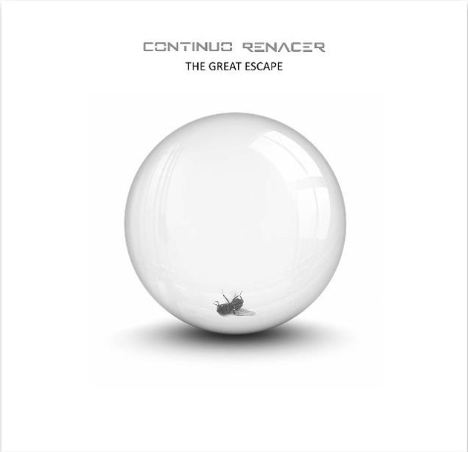
Continuo Renacer - The Great Escape review


01. The Great Escape
02. Give Up Tomorrow
03. For Those Things To Come
04. Facing Fears
05. The Newborn


This is some wanky, jazzy, death-injected prog that doesn't suck.

But before all but two of you leave, The Great Escape is also one of those albums that's so quirky it's kind of a must listen.  Thing is, Continuo Renacer aren't "hey look how clever we are, now you see me, now you don't", Criss Angel chilling with Herman Li, overly-indulgent kind of douchebags.  They might really be batshit insane.  Just speculating, of course, but the psychosis audible on this seems genuine.

The Great Escape is basically what you'd get if you took a slab of Primus, a pinch of Obscura, and a handful of Gary Busey telepathically communicating with an umbrella, then mixed them in an old industrial-strength blender. With almond milk. It's a loony. It consists mostly of dissonant, polyrhythmic whateverthefucks from the guitars, getting a lot of its melody from its bass. Excluding the brief phone recording bits during the first track, there aren't any vocals either (a good decision). The instruments coast and hiccup then shatter then coast then explode then coast together, and so on. It does seem pretty aimless by the end, but, strangely enough, aimless in a good way.

The band's myspace page says they're stuff is part death metal, which is true to an extent. A bit like how Subway sandwiches can be good for you.  If you took out all of the parts that make this tasty, yeah, there'd be some death metal left.  But, last time I checked, half a footlong on whole wheat bread with lettuce and vinegar isn't really a rewarding thing to chew on.  The weird synthy, jazzy, wtf injections on it are what make this album fun.  Despite the decent number of solid death riffs, it's an offbeat, proggy sort of deal first and foremost. One that just happens to get a little brutal sometimes. Nevertheless, the death metal injections were necessary too. A hoagie without bread and lettuce is a piece of shit.

This is some prog strangeness to melt into when, after a hard day not having a job and lurking on the old MS, you've got nothing better to do than zone out and enjoy a flashback or five. One more inane comparison: Listening to it is like kicking back in some surreal, Rocko's Modern Life-esque living room, watching Decapitated jam with Silvio Berlusconi on T.V., with someone babbling distorted riffs at you from behind the couch, and having one of Herbie Hancock's jazz fusion groups laying down fills from the kitchen for when commercials come on.  Sometimes a pretty sweet setup, for sure.

Standout tracks: "The Newborn" and "Give Up Tomorrow"

Sunday, 20 November 2011

Pure Reason Revolution - Hammer And Anvil review


01. Fight Fire
02. Black Mourning
03. Patriarch
04. Last Man, Last Round
05. Valour
06. Over The Top
07. Never Divide
08. Blitzkrieg
09. Open Insurrection
10. Armistice

Disc I [limited edition DVD]
01. Les Malheurs
02. Black Mourning
03. Apogee
04. Deus Ex Machina
05. Victorious Cupid
06. Fight Fire
07. Valour
08. AVO


This is probably one of the hardest reviews I've written for reasons that will become evident later. For starters let's just clear a couple of things up. First, I haven't been able to make up my mind completely about this release in well over half a year. Secondly, Pure Reason Revolution are without a doubt a brilliant band. Thirdly, and more importantly, in my opinion they are responsible for releasing the single most awesome record in the last decade - their début album The Dark Third. So, there you go, now you know where I stand with this band and we can talk freely about their third album Hammer And Anvil, and why it's been so hard for me to come to a proper opinion.

Pure Reason Revolution are, for the most part, a heavy dark-sided prog rock band. As said, the first album is brilliant prog stuff. However, now comes the hard part, with the EP released after the first album, and the follow-up album Amor Vincit Omnia they've gone half way electronic. And by half way I mean that some of the tracks were really electronica on the par with works of Kraftwerk. Now, bear with me. That is not the way I like my music at all but for some particular reasons the music and the songs grew on me. And while Amor Vincit Omnia was kind of a polar release, the Hammer And Anvil album is a far more refined and coherent album. It's like the band tested the boundaries and now found the sound they are all comfortable with.

So, what kind of a beast is Hammer And Anvil? If you are looking for a decent comparison of the electronic touch on the album, think Paradise Lost on One Second and Host albums, minus a bit of heaviness and gothic feeling. If you can comfortably handle that, this album will easily be to your liking. It kicks off with "Fight Fire" which is one massive punch of an opener. Feeding on industrial wastelands with electronic mixes the band produced a song that takes its time to properly take off the ground on the dance beats and heavy waves of distortions. After that it kind of settles down and moves into more rock based territories. Some songs, like "Last Man, Last Round," are heavier, some, like "Over The Top," more electronic, some, like "Open Insurrection," more progressive than others, but it's never too light mood-wise. The album offers you lots of great musical discoveries as long as you can embrace it all. Personally, I think I could do without the completely electronic "Blitzkrieg" but I'm slowly getting used to it.

What makes Pure Reason Revolution special, though, is that they manage to produce a myriad of sounds and heavily layered music. The subsequent listens will be unveiling details for quite some time to come. It's one of their distinctive features. However, the thing that basically defines their sound for me is the use of vocals. I like vocal harmonies, and Pure Reason Revolution are excellent at those. Two and three voice harmonies, singing the same lines or different, one female and two male voices - this is what first and foremost captured my attention. There are very few bands out there that manage to do it in such a balanced fashion as Pure Reason Revolution. Chloë Alper and Jon Courtney with support from Jamie Willcox make up an excellent vocal team in this regard.

So, there you go. As a band, Pure Reason Revolution are superb, and as much as I've seen footage, they kick ass live. But as far as the music goes, though, you have to decide for yourself whether you like or want to like their mix of prog and electronic. I know what I like about them and I tried to explain that a bit but am not sure whether I succeeded in this or not. As a closing verdict for the album, I'll just add that while I said it's far more coherent and refined than the predecessor, I figure they can still do a lot better on the path they've taken.

PS. A beer when we meet to the one who figures out which song the guitar tune in "Never Divide" resembles at the chorus between "You're all I wanted" and "There is no win." It's been bothering me for a long time and I'm stumped.

Friday, 18 November 2011

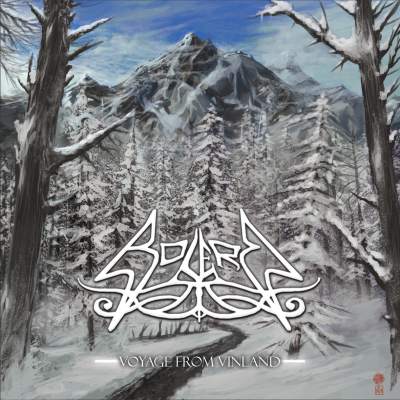
Bolero - Voyage From Vinland review


TRACK LIST:


01. Voyage From Vinland
02. Send Of The War Summons
03. When The Legends Die
04. Risen Victorious
05. Our Land, Our Seas, Our Skies
06. Pints Held High
07. O' Hail To The Northlander
08. Throne Of Storms
09. A Silence Prolonging
10. Way To Forgotten Lands
11. Sworn Under Winter's Majesty


I remember the first time I heard a folk metal song. There were explosions of endorphins, my spine quivered, and it was as if the Greybeards themselves were communicating with me...

No, but seriously? I was sitting in an algebra class, my buddy played an Ensiferum track for me, and I thought it was pretty fucking stupid.

That said, a couple weeks passed and I kept returning to that song (pretty sure it was "Into Battle"). Ended up getting kinda into it. A little more time passed, I bought an Ensiferum album and a druid wizard staff. Considered myself an aficionado.

Fast forward a few years. Now I don't know where I stand with the genre. There are definitely a handful of badass bands from it, it's just, there's a titanic load of groups around now that expect to develop a following by having us listen to them gaze backward toward viking times, drooling, with a chubby, blow on some recorders and play some really basic heavy/power metal.

This is somewhere in the middle. Take out the folkish, synthy melodies, and, yeah, its songs would suck. Just happens that the actual blend on this is, more or less, passable. It's fun enough. Think (the indefatigable) Blackguard meets some lost Ensiferum b-sides. There's nothing particularly interesting or unique about what these guys do, but I'm sure their stuff can make for some decent "let's get stupid drunk" listening every now and then.

The musicianship on this is definitely really good too. The vocalists are great, the guitarist(s) shred(s), etc. Some real folk instruments would have been a worthwhile addition, but the synth-dude has chops, so can't complain too much. What's a pretty major piss-off for me though has to do with the double bass work. Something's wrong with it. Can't tell if it was a mixing problem, a problem with some computer shit, or something to do with triggers, but it sounds pretty fucking weak most of the time.

But overall, the biggest problem with this is that it came out feeling like a fence-sitter of an album. Put it on and you'll probably get your kicks, but it's not quite epic and fantastical enough, nor is it quite aggressive and thrashy enough. The dudes in Bolero know how to write catchy tunes, they just didn't hit on anything very memorable with this. This brand of viking/folk has been done a lot now. Takes more than some solid hooks and some shredding to stick out.

Uigg - Of Moose And Men review


01. Endless Suffocation
02. Of Moose and Men
03. Sinking
04. Buckshot
05. Master Hunter
06. Loose Ends
07. Monstrosity
08. Thrown to Wolves
09. Legion
10. Sycophant
11. Crawl
12. Onslaught


Here we go again, another living example of production work being significantly lack-lustre in relativity to the song writing. Let's not get all negative about this now, because Of Moose And Men is actually one solid thrash album at it's core.

With this release, Uigg really bring me back to the sounds of Rumpelstiltskin Grinder's debut album Buried In The Front Yard; sort of a modernized groove-thrash akin to Pantera in many aspects, pushed to a few more aggressive extremes (blast-beats, a few grind-ish riffs here & there.) Of Moose And Men personifies almost everything you'd want in a modern thrash album; aggressive, catchy, a few winks to their influences without being too derivative, all while having just enough variation in riff styles & tempos to keep things exciting.

All these great aspects are horribly obscured by possibly the most unfitting recording job I've ever heard. The riffs here are pretty freakin' massive, too bad the whole thing sounds horribly condensed. At some points, it gets so difficult to get yourself past this John Goodman-In-Tight-Leather-Pants style production just getting into the music can be a real chore. One upside to all this is how forward the percussion is in the mix; the drumming is uniquely interesting, it becomes it's own lead in a way, as opposed to being the usual click-track laden, glorified metronome.

Had the performance & song writing been any less than what it is, this album would have been pretty crappy. However, Uigg really make a leap to overcome the production pit-falls with great success. Ignoring sloppy work at the mixing boards, Of Moose And Men is a really tight album.

Thulcandra - Under A Frozen Sun review


01. In Blood And Fire
02. Black Flags Of Hate
03. Ritual Of Sight
04. Under A Frozen Sun
05. Aeon Of Darkness
06. Echoing Voices (A Cold Breeze Of Death)
07. Gates Of Eden
08. Life Demise [Unanimated cover]


I wanted to make some really cool analogy for Thulcandra being the answer (supply) to the world's demand for Dissection stocks or bonds or whatever, but I spent too much time chasing squirrels as a kid instead of reading The Wall Street Journal so I don't know what's a NASDAQ or a derivative. But if you can imagine how cool it would have been that would really help me out.

In any case, the comparison has been made so you know what you're getting yourself into with this band. Dissection worship. Melodic black metal. But unfortunately not with that trademark Swedish death metal sound. *le sad face*

When you look at a tracklist with 8 songs, most of which stretch beyond the 6-minute territory, you expect one of two things: excellent songwriting to keep you interested, or prog wankery bullshit that will put you to sleep. Under A Frozen Sun honestly takes elements from both of those expectations. On one hand the songs flow incredibly well together as if telling a story, like an album should flow. The riffs are entertaining and catchy, it's melodic yet avoids cheesy territory, the drumming is varied... just about everything good you could ask for is happening.

But then the other half of the songs kick in. That's when you sit back and stare into space because you've heard the exact same thing for the last 5 minutes. The same catchy riffs, the same awesome melody, the same energetic drumming. Drool starts to trickle down your chin and you smash your knee against the bottom of the computer desk when your cat knocks over the urn with your grandmother's ashes in it. So you roll around in them with said cat for a few minutes before the song's finally over and you can begin anew with a 10-minute tune. Only to end up feeling that same lull effect of the previous song. Drool. Ashes. Feline fanaticism.

And there you have it, a slickly produced melodic black metal album that doesn't try too hard to be The Somberlain, but one that also suffers from being unnecessarily lengthy. Trim some of the filler in each song and you're looking at an incredibly strong album, but as a result of too much cream in the Oreo (as if that can be used negatively), Under A Frozen Sun just comes across as almost good.

Wednesday, 16 November 2011

Black Tusk - Set The Dial review

<>

01. Brewing The Storm
02. Bring Me Darkness
03. Ender Of All
04. Mass Devotion
05. Carved In Stone
06. Set The Dial To Your Doom
07. Resistor
08. This Time Is Divine
09. Growing Horns
10. Crossroads And Thunder


The album will be released on October 31 internationally.


Here comes Black Tusk! They're groovy, sludgy, heavy, and catchy! Aaaaaaaaaand...

Not all that exciting.

All the ingredients to make stoner/sludge metal are there, exactly where you'd expect to find them. Set The Dial may just be exciting if you've never really listened to anything in the sludge and/or stoner subgenre before, for everyone else, it's unbelievably textbook. Those abrasive quasi-harsh vocals rolling along with the thundering fuzz-toned, bottom-end heavy riffs. It's all there, in fact, it's really hard to make any complaints seem all that legitimate. After banging your head out to bands like Bison B.C., Kylesa, Hail! Hornet, and High On Fire, Black Tusk just seem a bit uninspired. In fact, if I was asked to describe Black Tusk in 3 words, the only appropriate response would be "second-rate Bison*.

It is what it is, though. Hearing this through less seasoned ears might actually be a treat. It's an embodiment of everything sludge/stoner; dirty grimy, catchy, and heavy in an earthy sort of way. Hell, it's even got the John Baizley artwork to boot. I can understand a lot of bands in this circle are sort of creating their own regional brand of pounding sludge metal (Savannah, Georgia - home to Kylesa, Black Tusk and Baroness.) However, these guys just don't have the personality their compatriots do. It's like that friend who steals all your best jokes, then consistently fucks up every punch line.

Set The Dial is not a terrible album by any means. It just seems like Black Tusk may just be one of the first in a generation of assembly-line sludge bands. It had to happen some time.

*Bison can be switched out for any number of bands in this case.

Saturday, 12 November 2011

Unexpect - Fables Of The Sleepless Empire


01. Unsolved Ideas Of A Distorted Guest
02. Words
03. Orange Vigilantes
04. Mechanical Phoenix
05. The Quantum Symphony
06. Unfed Pendulum
07. In The Mind Of The Last Whale
08. Silence This Parasite
09. A Fading Stance
10. When The Joyful Dead Are Dancing
11. Until Yet A Few More Deaths Do Us Part


The Montreal-based asylum known as Unexpect broke a 5-year silence after with their new opus Fables From The Sleepless Empire. And the least I can say is that it is a demanding listen. Absolutely insane actually! This is the toughest review I had to write seeing that there is more music to be found on the opening track than on most albums. If any musical label can be applied to these guys, only extreme avant-garde metal would do them somewhat justice. And this is just a snooty way to say I have no clue.

Despite the long hiatus, their new songs still sound like three different bands are playing at the same time and somehow sound incredible. There is an over-the-top mockery orchestration a la crazy circus enveloping a female-fronted pop/gothic band seconded by a mambo/salsa/jazz outfit and all of it nicely wrapped up by an ultra-deranged melodic death combo. Needless to say these songs feature some of the craziest arrangements you will ever hear. If you like your music linear and structured, you are out of luck. This is total musical madness. But more surprisingly, the organized chaos seems to become a shape shifter along the number of listens, creating an elaborate labyrinth of unmatched sonic landscapes. Essentially the pandemonium seems to have a life of its own. And that is where the magic happens with this band. Growls, screams and female vocals share the scene relentlessly and harmoniously despite the presence of three full-time singers. The frantic violin and hectic piano both act as the binding element between the genres. However, do not be fooled by all the extras. At the core this is brutal, even violent music. No one comes out unscathed. Most of the guitar work is memorable breakneck riffs and killer melodies. Technically this is out of this world.

Compared to their previous album In A Flesh Aquarium, this new offering has a more modern feel. Overall, I would say it is even more progressive. It also seems the gothic elements have been toned down to give the melodies more of an industrial pop texture. Regardless, Fables From The Sleepless Empire is a monumental and mature effort that demands multiple listens to fully enjoy. Simply put, it is one of the best albums of the year as long as you like manic music.

Monday, 7 November 2011

Iron Maiden - The Final Frontier


01. Satellite 15... The Final Frontier
02. El Dorado
03. Mother Of Mercy
04. Coming Home
05. The Alchemist
06. Isle Of Avalon
07. Starblind
08. The Talisman
09. The Man Who Would Be King
10. When The Wild Wind Blows


Iron Maiden have had ups and downs, but they consistently stuck to their unique style. 2006's A Matter of Life and Death saw a serious departure from that style towards a darker, more progressive sound - it was only a partial success. Unfortunately, Steve Harris and Co. felt encouraged, and decided to go further in their departures. The first 4 songs on The Final Frontier rank among the worst this band has ever committed and most of the time sound nothing like the Iron Maiden everyone knows. Departure from style my ass. If they wanted to depart again, the previous album was the way to do it.

'Sounds like shit' - this was my first thought when I heard the longish introduction to the album. "Satellite 15..." is so unlike anything that Iron Maiden have ever recorded. A crude, repeating drum pattern, distorted, spacy sounds, drunken guitars that go nowhere. Even the vocals, when they enter, sound strange. Not only does that intro suck, but it also sounds really weird. Fortunately, the song changes radically after 4 minutes into a remote semblance of a good song.

'What the hell have they done to Iron Maiden?' - that was my second thought. The opening tracks are decent enough for thousands of obscure bands who would be proud to have recorded them, but for Iron Maiden standards, they are sodding poor, and I mean really poor. "The Apparition" poor. "The Final Frontier" isn't utterly abysmal - resurrecting the spirit of the 70's metal, with a catchy chorus, it is remotely palatable. But to balance it, "Coming Home" is an Iron Maiden fan nightmare, sounding like it was recorded during the Fear of the Dark session, which, in my opinion, is the worst Iron Maiden album, with only 2 good songs.

The next six tracks brought back some of my faith in Iron Maiden. Long songs, catchy choruses, melodic solos, everything is seemingly in place. Seemingly - Maiden fans can at last feel at home, and utter a sigh of relief, because there will be no more experiments until the end of the album, at least not as blatantly obvious ones as the intro. But what follows isn't top-notch Maiden, it's mid-range most of the time. Solos aren't too memorable, vocal lines aren't too melodic, riffs don't stick in my head.

Only the last song, "When the Wild Wind Blows," can be honestly called excellent. The riffs supported by simple, but powerful drumming somewhere in the 7th minute of the song - in that solitary moment Maiden sounds really classy. The song isn't quite as good as Maiden's best classic tracks, but it's on a par with the good songs from the later period. Maybe the leading vocal theme sounds too joyful and optimistic, in spite of telling a grim tale, but the song is deliciously complex and rich, a real treat to end this album.

Having died during the first 4 abysmal songs, I was partially resurrected by some good ones that followed, of which, sadly, only one is brilliant. The Final Frontier clocks in at over 76 minutes, and most of these minutes are well spent, assuming you have a pair of paddles handy to shock you back to life after the cardiac arrest that you will undergo at the onset of this album. Better yet, start listening from "The Alchemist." You should be at least partially satisfied.
How do I rank this? I could try to turn a blind eye on the beginning of The Final Frontier. But 4 terrible songs out of 10 is quite a lot. Sorry guys, not this time around. I can't ignore 40% of the album. 1 point up for the last track.

Sunday, 6 November 2011

Noctem - Oblivion

Noctem - Oblivion


01. Popol Vuh
02. The Arrival Of The False Gods
03. Universal Disorder
04. Abnegation And Brutality
05. Invictus
06. Sons Of Hun-Vucub
07. Seeking The Ruin Of Souls
08. Unredemption
09. Q'uma'rka'aa'j
10. A Borning Winged Snake
11. Oblivion


On paper, Noctem would appear to be a pretty typical extreme metal band that's somewhat ambiguous when it comes to defining it as black or death metal. Staple, tried-and-true bits are showcased in a pretty regular fashion. The funny thing is, for how typical they come across, Noctem embodies the basics of all you could want in a good ol' teeth-gnashing extreme album.

Oblivion isn't about reinventing the genre by any measure, instead it's just an album that is as evil and pissed off as possible. That might be what really sets this band apart; pure visceral ferocity. Of course, there is the obvious displays of technical prowess and the necessary distinct melodic riffs to give it that extra dash of evil, but there is no over-emphasis on being as complex as possible as seen in too much extreme metal these days. It's hard to get that feeling of pure rage across when the music sounds too calculated, which is a pitfall Noctem thankfully avoid.

Yet, this album could have been so much more. They've got the fury down, but they lack the rawness. "Raw", now, that's an easy word to toss around when reviewing an extreme metal album. No, for once I'm not talking about the production here. Yes, the production is crisp and clean, but it really fits the sharp, cold feeling Oblivion is all about. It's mostly the percussion that holds it back; it's far too drenched in triggers & click-tracking. That's what separates primal sounding albums from the machine sounding albums. Noctem were almost certainly going for the cold machine sound here, so good on 'em, they nailed it. They nailed everything else on this album, it would have been nice to see them make at least one risky side step.

Yeah, the percussion could have been a little more exciting, but overall Noctem managed to hammer out an angry-as-fuck album on all other fronts, making this another one that's worth checking out.

Saturday, 5 November 2011

Hammers Of Misfortune - 17th Street


Hammers Of Misfortune - 17th Street
25 October 2011


01. 317
02. 17th Street
03. The Grain
04. Staring (The 31st Floor)
05. The Day The City Died
06. Romance Valley
07. Summer Tears
08. Grey Wednesday
09. Going Somewhere


Hammers Of Misfortune; yes, more commonly known as "that band that used to have that main dude from Slough Feg in it." This band is incredibly eclectic prog-rock that covers quite a bit of ground; ranging from your typical 70's pompish prog to doom, with a few glimpses of old school Misfits-esque horror punk moments. It's something that is quite astonishing upon first listen. Astonishing then turns to overwhelming. Overwhelming turns to irritating. Sure enough, after a fair amount of plays through, this ain't the same album you listened to the first time around.

That's both the beauty, and ugly part of this album. 17th Street is an incredibly busy album, which is something that can make this either sound quite clever in it's melodic complexity, or horribly tedious. One moment you may listen to it and notice certain details below the surface that really compliment the whole arrangement, other times that same attention to detail makes the whole thing seem to be more of a messy display of over-indulgence. It goes from a genius tapestry to a jumbled up ball of yarn, then back again. Regardless, it's hard to pigeonhole, I'll at least give them that much.

The production is very fitting. It is very modern sounding, but there is definitely an earthy/organic type undertone that really fits the whole classic aesthetic they've got going on. To wrap things up in a nice little package; it sounds like a late 70's prog album modernized for all us young whipper-snappers.

Fans of old-school prog will probably see 17th street as more of a glass half-full type album, half-empty for people just looking for some steady melodic hard-rock.

Dream Theater - A Dramatic Turn Of Events

Dream Theater - A Dramatic Turn Of Events


01. On The Backs Of Angels
02. Build Me Up, Break Me Down
03. Lost Not Forgotten
04. This Is The Life
05. Bridges In The Sky
06. Outcry
07. Far From Heaven
08. Breaking All Illusions
09. Beneath The Surface


There is no denying Dream Theater has been an enormous influence on progressive music for the last two decades. Every new release of theirs usually generates a buzz among fans and media alike. But since founding member, natural leader and revered drummer Mike Portnoy left the band unceremoniously last year, the free press the band is getting has been off the charts. After an overly publicized series of auditions whence drumming instructor Mike Mangini came triumphant, expectations were at an expected all-time high. A lot of doubts and uncertainties were lingering in the air. So what? You ask. Well, it all depends who's giving you the answer. Reviews have been split across the internet spectrum. But since you're stuck with me, here are my thoughts.

First of all, the essence of Dream Theater is intact. If you were unaware of Portnoy's departure - like you just came back from your space mission - you mightn't be able to tell. Seriously, Mangini was picked by the stranded band members because he can sound so much like Portnoy. And he does effortlessly or so it seems. Nuances or subtle between the two drummers, and in my opinion there isn't anything to nitpick about. So let's move on.

More interestingly the songs all have something distinctive. It takes a while to appreciate them though, which isn't that surprizing considering we're talking about archetypical progressive music. Once the musical assimilation hits you full-blown, a few standout tracks emerge. Notably the epic "Bridges in the Sky" has something of a old-fashioned DT aftertaste despite the unconventional intro while songs like "Lost Not Forgotten" and "Outcry" possess that oomph factor that has been missing in recent years. Let me put it this way. I have been listening to the album since it came out and still at this point in time there isn't a track I would skip. Not a single one. Even their ballads took a hold of me quite quickly and that is the mark of a successful album.

On the flip side of the coin, the keyboard work is at times overbearing even by Dream Theater standards. However, technically this is mesmerizing work by Jordan Rudess I must admit. John Petrucci seems to be thriving again. He finally relaxed the blockade of ostentatious overpowering riffs to restore a balance in his playing that makes one equally thrill whether he's soloing like a madman or hitting the softest note. James LaBrie solo works seem to have steadied him and inspired him to take more risks. John Myung is his usual perfect self on bass and Mike Mangini shows that he belongs one hundred percent.

Sure their solos are sometimes over the top and some songs would have benefited from an earlier wrap but overall A Dramatic Turn of Events is smooth and more consistent than its recent precursors. Give it a serious listen while keeping an open mind, there is much for you to discover.

Insomnium - One For Sorrow

Insomnium - One For Sorrow


01. Inertia
02. Through The Shadows
03. Song Of The Blackest Bird
04. Only One Who Waits
05. Unsung
06. Every Hour Wounds
07. Decoherence
08. Lay The Ghost To Rest
09. Regain The Fire
10. One For Sorrow
11. Weather The Storm [special edition bonus]


If I were to ask you what makes a great Metal band, the answer should be pretty much the same across the board: great albums. In truth, a series of great albums that follow the same structure yet manage to be different enough to be individual works while being similar enough to create a unique trademark sound. Do you see now how fine of a margin bands have to operate? Finland's Insomnium have established themselves as a juggernaut of Gothenburg Metal with a trilogy of sublime releases 2002's In The Halls Of Awaiting, 2004's Since The Day It All Came Down & 2006's Above The Weeping World. Then they managed to cleverly modernize their sound with 2009's Across The Dark. With a growing fan base and so many solid works behind them, their new release One For Sorrow has been one of the most anticipated albums of the year, and for good reasons.

Once more the homogeneity of this offering is its greatest upside. It is like Ville Friman and Niilo Sevänen came up with twice too many great songs and just rammed the best of them on a fast-paced, ass-kicking, modern monument of a melodic Death metal album. The intro builds up the atmosphere perfectly and the following tracks never let go of this canalized energy. Without reinventing their sound, Insomnium manage to bring enough new perspective to enthrall listeners through a seemingly everlasting journey into awesomeness. Growls dominate the vocal registry. Nevertheless, clean vocals are featured on some of the tracks, sometimes pushing as far as giving a pop vibe to choruses on songs such as "Through The Shadows" and "Regain The Fire".

The naysayers will point out the same song structures, same album structure and the same atmosphere as on Across The Dark. And it would be hard to refute them. But beauty is in the details and the musicians are throwing a lot of those at you over the course of a single song. And that is why Insomnium swim at the top of their musical field.

The question remains whether you find what makes this album different from its precursor or not. I know I have. Whether you are familiar with their previous albums or not is a moot point. There is enough on One For Sorrow to please fans and newcomers alike.

Metallica - Lulu review


Metallica - Lulu


Disc I
01. Brandenburg Gate
02. The View
03. Pumping Blood
04. Mistress Dread
05. Iced Honey
06. Cheat On Me

Disc II
01. Frustration
02. Little Dog
03. Dragon
04. Junior Dad


Some people righteously claim that this is not a real Metallica release and thus it can't be viewed as such. I agree. Metallica decided to co-operate with Lou Reed in his interpretation of Alban Berg's opera based on Frank Wedekind's plays "Erdgeist" and "Die Büchse der Pandora". The history behind that opera is as complicated and dramatic as one can imagine, assuming what a dark story it tells.

But it all bears no significance at all. An ordinary listener will not give a damn about the literary predecessor that became grounds for this album. All an ordinary listener cares about is the music. And this is what is the biggest failure here. A gargantuan failure of biblical proportions. A debacle of misbegotten notions. A hapless heap of humungous refuse. Even the Apocalypse of John doesn't depict an event as catastrophic as this brainfart committed by a bunch of pretentious musicians and their misguided greed for mainstream recognition.

There isn't much to say about the music here. Metallica plods along with some recycled riffs (or lack thereof, see "Junior Dad"), boring drumming and generic singing, all that hidden ten fathoms under Lou Reed's mumbling. The mumbling that is so incredibly annoying, that I feel like shooting myself so that I can never hear it again.

Creating a piece of art isn't a conscious process. You sit down, write music, jam with your fellow bandmates, then record your endeavors, and if the general public, the history and fate decide that your work was brilliant, that it's a paragon of genius for generations to come, it will be so. But you can't calculate it. To me this is what Metallica and Lou Reed did. Tried to do. Failed miserably. Nuked all that remained of any shred of respect any fan could have for them. Genius arises by the way, not by calculation. How the fuck would they know that anyway.

Forgive lack of down-to-earth dissertation of the music. Forgive the dissonant style of this review. Only two things can make me write such a rant. Either utter genius or utter shitfest at the bottom of the cesspool of miscarried intentions. It shouldn't be hard to figure out which was the case this time.